By Michelle Kangas, Finaeon, Inc.
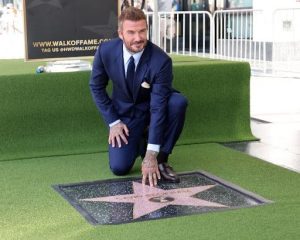
When people think of David Beckham, what comes to mind? Well, he just received a star on the Hollywood Walk of Fame June 12, 2026. But what else comes to mind: Real Madrid, “Posh Spice”, “Bend it Like Beckham” curving free kicks or celebrity style? No matter your opinion, Beckham is much more than a footballer. He became one of the most iconic examples of how an athlete can become an economic asset for global brands resulting in brilliant and lucrative marketing campaigns.
His endorsement deals with Adidas, Pepsi and Gillette show how an athlete’s image can influence consumer behavior, brand visibility and investor perception. Beckham did not simply wear products or appear in commercials. He helped turn athletic identity into commercial force. Women loved him and men looked up to him. This is a perfect fit to sell products and a lot of them!
For Finaeon, this creates an interesting question: how do celebrity endorsement cycles influence a stock price or show up in financial data? Which is better?
Adidas: A Unique Endorsement
Among Beckham’s major endorsement relationships, data indicate that Adidas has paid the most. In 2003, Beckham reportedly signed a historic lifetime partnership with Adidas valued at more than $160 million, including an estimated $80 million upfront payment and ongoing profit-sharing royalties.
This was not a traditional athlete sponsorship. It was a long-term brand alignment between one of the world’s most recognizable footballers and one of the world’s most important sportswear companies.
The timing mattered. Beckham was not only a successful athlete; he was a global cultural figure. His move to Real Madrid in 2003 placed him inside one of the most commercially powerful football institutions in the world. Adidas not only benefited from advertising campaigns featuring Beckham, but benefited from global exposure through boots, particularly the Predator line, replica shirts, and Beckham-branded merchandise.
Reportedly, Beckham-related merchandise generated enormous retail activity for Adidas, with some estimates placing related sales in the billions. Whether measured through product sales or global brand impressions, Beckham helped Adidas connect sport, fashion, and identity in a way few athletes had done before.
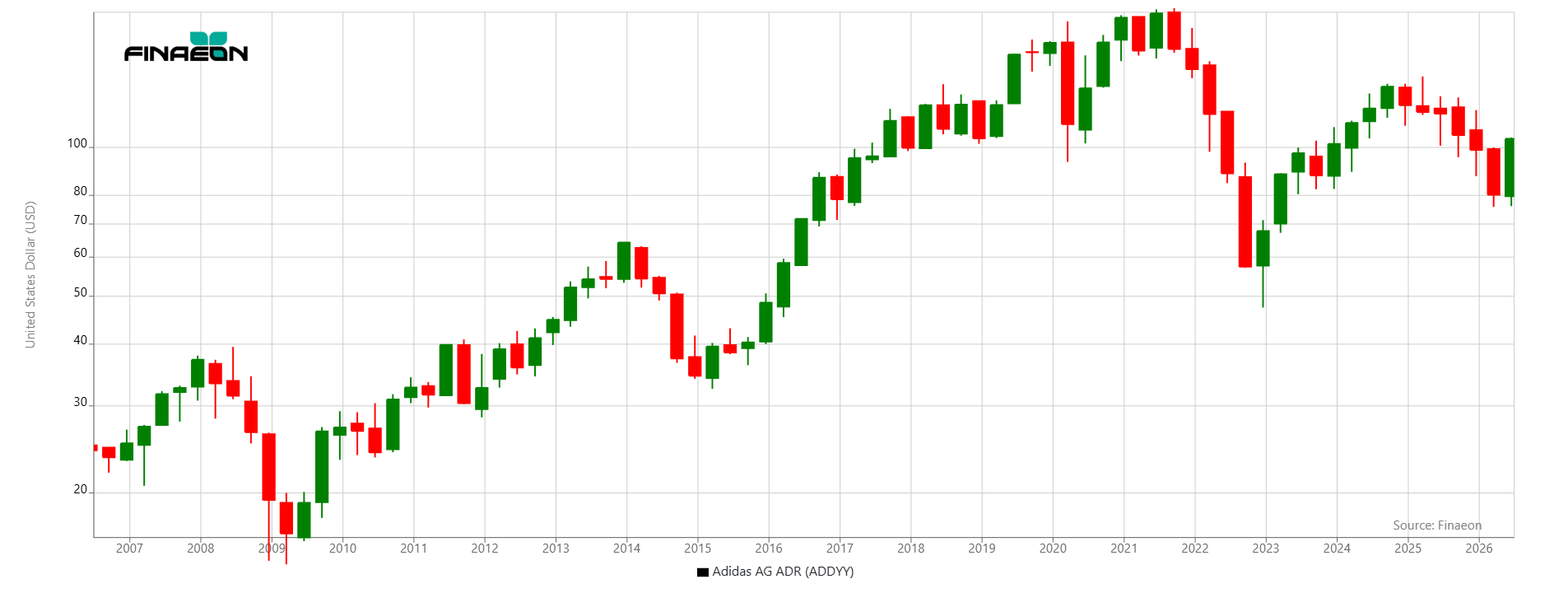
The candlestick chart above depicts price and volume trading for Adidas AG since 2006, when its ADR began trading in the United States. Adidas is listed in Germany, and an American Depositary Receipt, or ADR, allows U.S. investors to gain exposure to a foreign-listed company through U.S.-traded certificates backed by deposited shares. The ADR’s value generally tracks the price of the underlying Adidas ordinary shares, adjusted for the ADR ratio and currency exchange rates.
Pepsi: Beckham “The Global Generation”
Pepsi’s relationship with Beckham was different. Pepsi was not simply selling a soft drink. It was selling the “global dream”. The commercials made Pepsi feel less like a beverage and more like a lifestyle: young, bold, attractive and connected to international energy.
Beckham’s Pepsi partnership reportedly ran for approximately ten years, from 1999 to 2009. The deal was said to pay him roughly $3 million to $3.6 million per year, totaling approximately $30 million to $36 million over the life of the relationship.
Pepsi used Beckham in large global campaigns alongside other football stars, especially around major international tournaments, placing Beckham inside the broader entertainment economy of football.
For PepsiCo, the value was not limited to one product line. The company benefited from global visibility, tournament-driven advertising, such as campaigns tied to Euro 2004 and the 2006 World Cup, and Beckham’s crossover appeal beyond traditional sports fans. With Beckham, Pepsi attached its brand to confidence, celebrity, football, friendship, and global excitement.
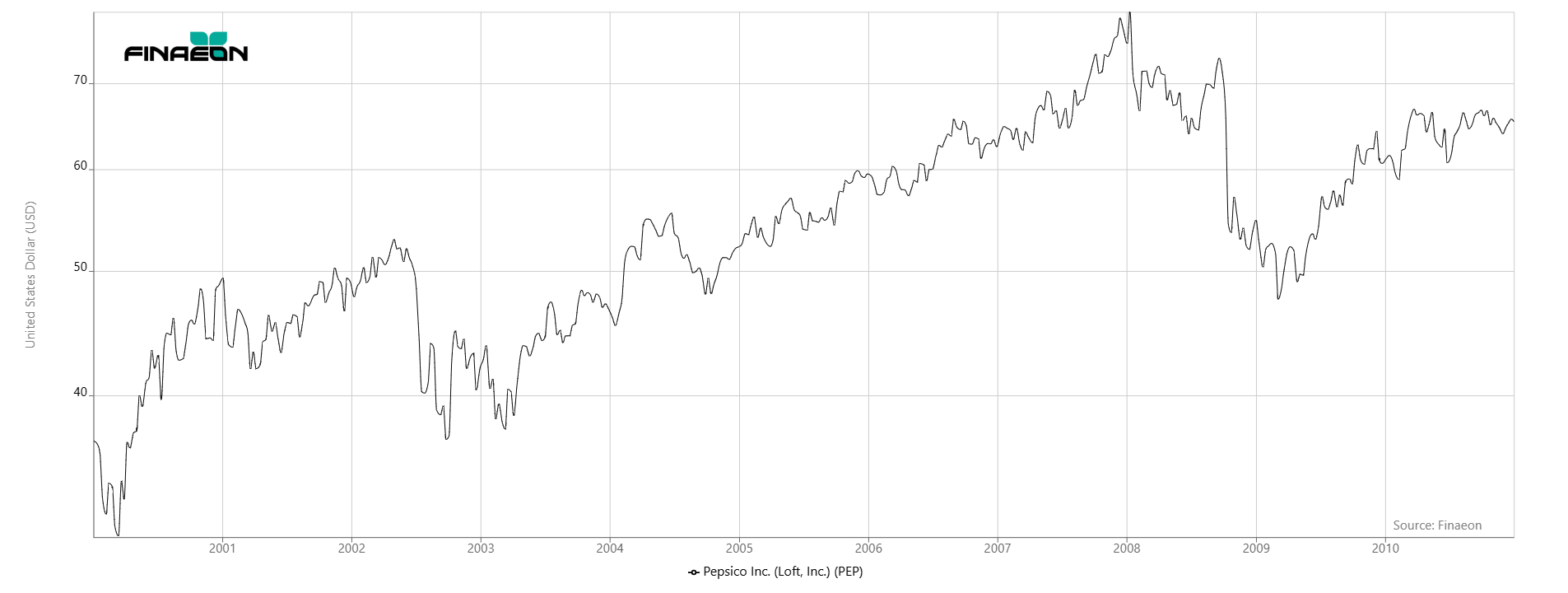
The first line chart above displays PepsiCo, Inc. (PEP) daily stock prices from 2000 through 2010, tailored to the Beckham endorsement period. Daily periodicity shows each session’s movement clearly, making it straightforward to examine price behavior around major campaign launches and tournament cycles without the data being compressed.
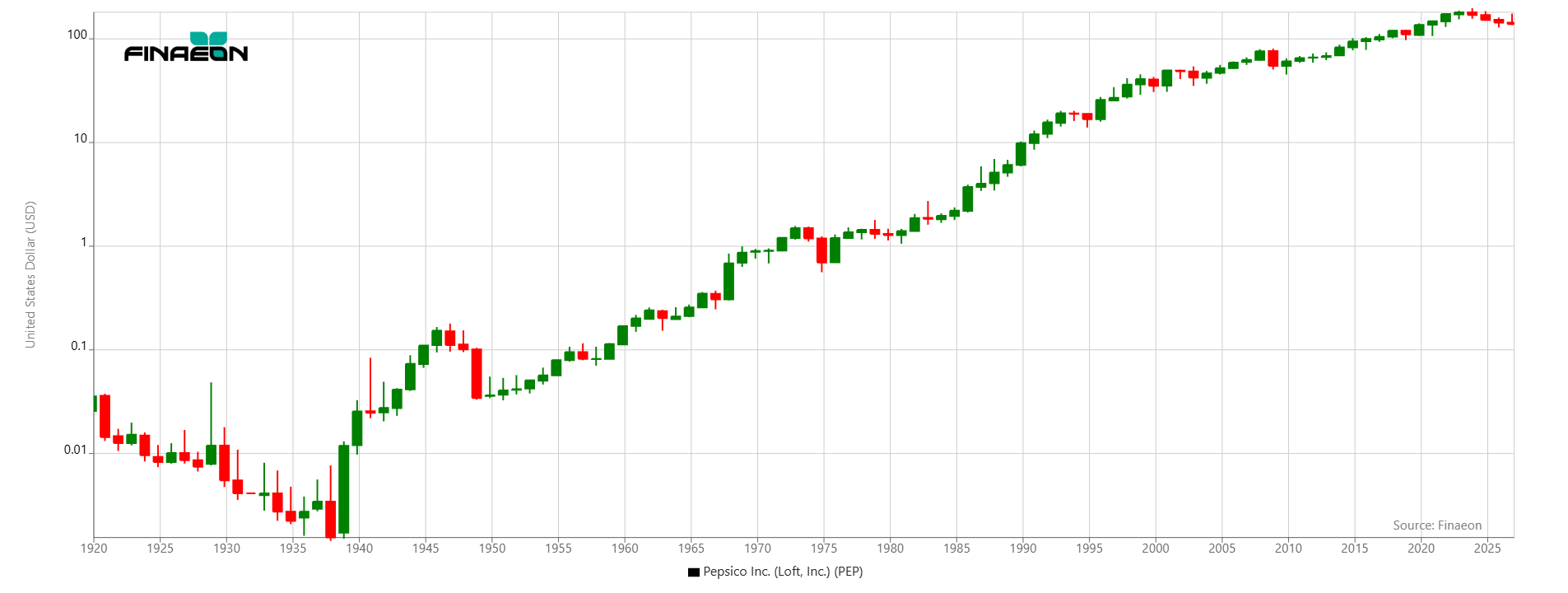
The second chart below shows PepsiCo from inception in the 1920s through present day in an annual candlestick view. Finaeon provides data on PepsiCo back to its origins, giving analysts the full historical record alongside any zoomed window they choose. The platform makes it easy to switch between a century of data, and a focused ten-year view of the exact period that matters. According to reports at the time, PepsiCo noted that Beckham’s involvement contributed to brand visibility and share price growth during his tenure as an ambassador.
Gillette: Shave It Like Beckham
Gillette also used Beckham as part of its global brand strategy. His reported three-year deal, signed in 2004, was rumored to be worth between $40 million and $70 million before the relationship ended in 2007.
Beckham’s Gillette endorsement is particularly interesting because it sits right at the intersection of sports marketing and corporate history: Procter & Gamble acquired Gillette in 2005.
That matters for investors because Gillette no longer traded as an independent public company during the full Beckham endorsement period; after the acquisition, its results were absorbed into Procter & Gamble, ticker PG.
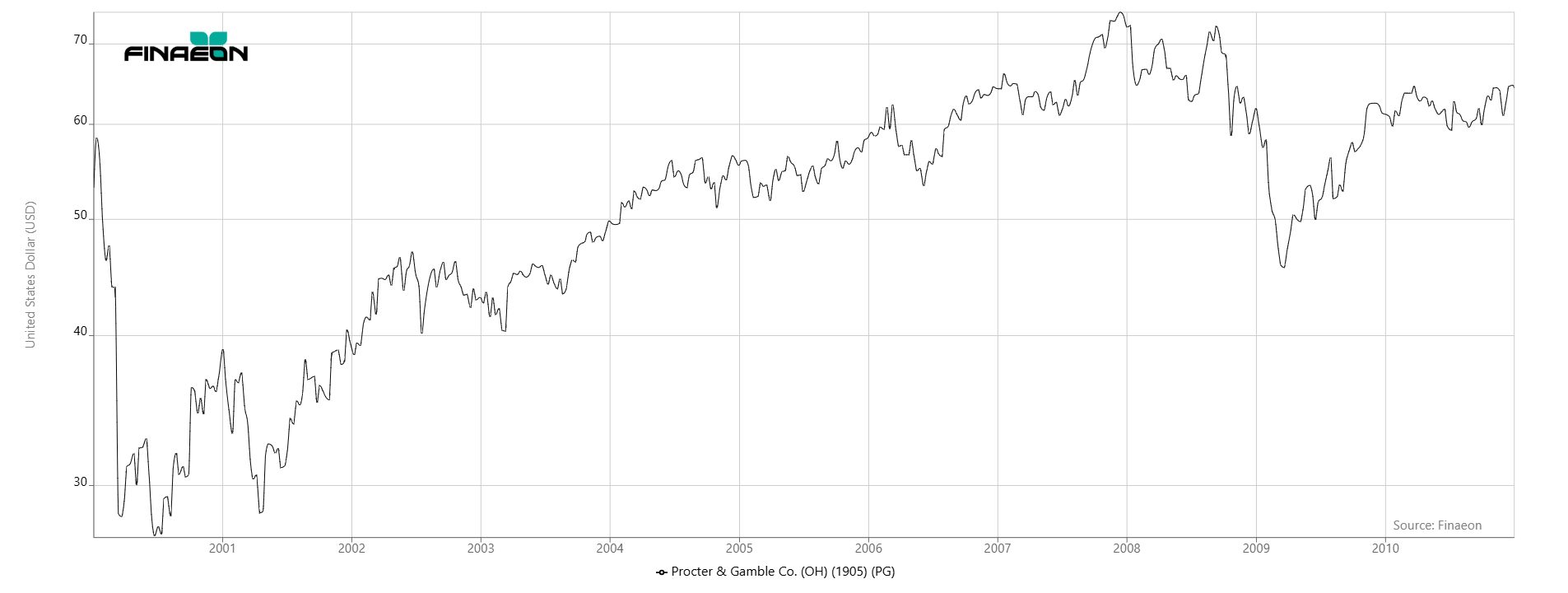
The first line graph below displays Procter & Gamble Co. (PG) daily stock prices from 2000 through 2010, tailored to the Beckham-era Gillette endorsement window. Daily periodicity lets readers see each session’s movement clearly during the partnership period without the data being compressed.
The second chart below, a candlestick depicting trading volume and price, shows P&G from its 1905 founding through present day in an annual candlestick view. Finaeon provides full coverage on P&G from inception, so analysts have the full historical record available alongside any focused granularity necessary for tailored analysis. The platform makes it easy to move between a full-century view and a specific cycle with a simple change to the time frame and periodicity settings.
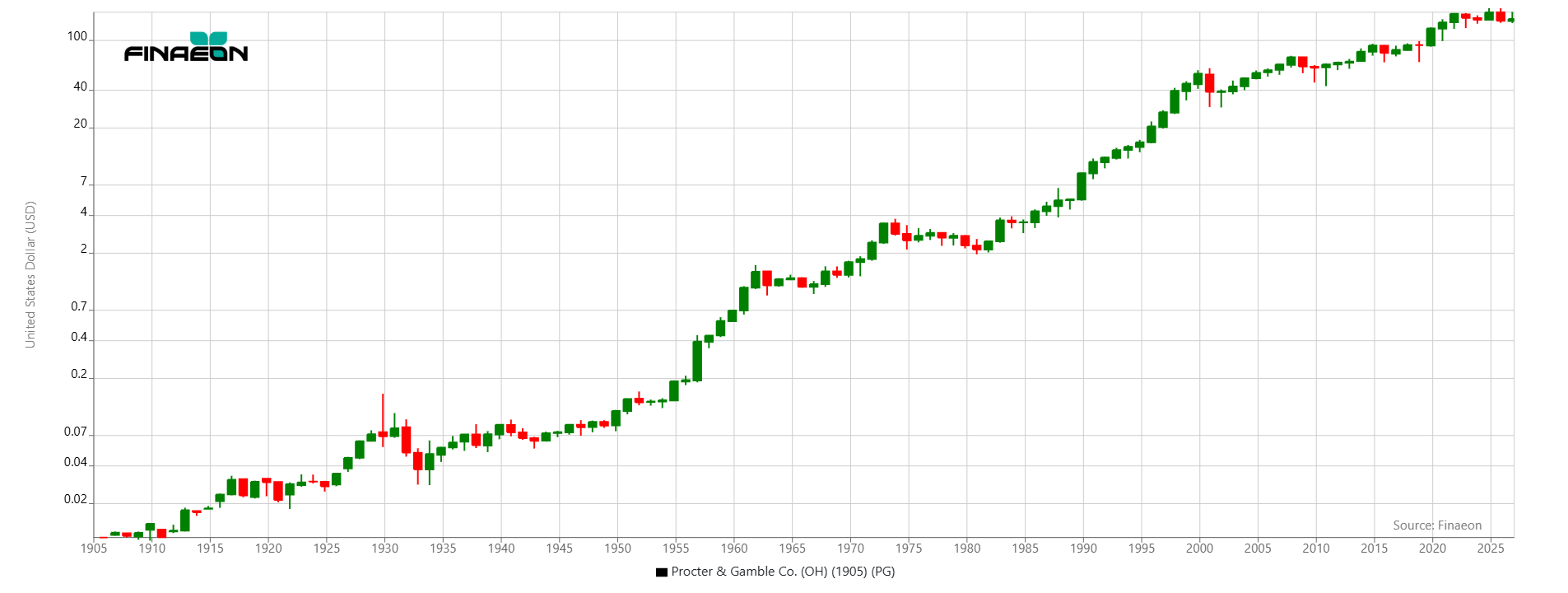
Reports from that period noted that P&G experienced meaningful price growth coinciding with the Gillette integration and Beckham’s global campaigns.
This creates a useful charting opportunity. Finaeon analysis allows comparisons of the Beckham campaign period against P&G’s post-acquisition performance, especially as Gillette became part of a larger consumer-products portfolio.
The key point is not that Beckham alone drove P&G’s results. A company of that size has many revenue drivers. But Beckham’s campaigns offer a good case study in how a global celebrity can support a consumer brand during a period of corporate integration, product visibility, and international marketing.
The Modern Economic Approach
The Beckham endorsement story has Star Power -- an ultimate message about intangible assets creating tangible economic value. Companies pay athletes because fame can become financial infrastructure, shaping brand trust, product demand, cultural relevance, international visibility, and investor perception.
Beckham’s value came from the fact that he crossed categories. He was not only an athlete, but also a fashion figure, celebrity, family brand, and global ambassador. Each brand was buying more than a spokesperson; they were buying access to Beckham’s global audience and the emotional response that came with it.
That model has only become more sophisticated today. Modern companies now ask whether an athlete can move products, generate engagement, expand into new markets, and create measurable brand lift. For investors and analysts, the question is no longer whether celebrity endorsements matter, but how to measure where and when they matter.
That is where global financial databases like Finaeon become useful. By combining historical equity data, revenue data, event timelines, and corporate ownership structures, analysts can move beyond the headline endorsement number and examine the broader economic impact. David Beckham’s career offers a compelling case study because his sponsorships were large, global, and attached to public companies.